Terminal illness
A diagnosis with a limited life expectancy.
What qualifies
Generally, an illness a physician certifies is expected to result in death within 24 months (12 months in some states).
Up to $1.5 million*
Most people think life insurance only pays when you're gone. Some policies also let you access part of your benefit early if you're diagnosed with a serious illness or injury, when your family may need it most.
Rose Chen, RN, licensed life insurance agentAs a registered nurse, I've sat with families on the day they hear a hard diagnosis. The medical side is overwhelming enough. Then come the questions no one is ready for: How do we pay the bills if I can't work? Who covers the care that insurance doesn't?
A doctor confirms a serious illness or injury. Treatment starts, and so do time off work and changes at home.
The mortgage, groceries, travel to appointments, help at home. Health insurance helps with medical costs, but it doesn't replace your paycheck or pay your everyday bills.
With the right policy, you can request part of your death benefit early. The money is paid to you, and you decide how to use it.
Depending on the policy, you may be able to access part of your benefit for these qualifying events.
A diagnosis with a limited life expectancy.
Generally, an illness a physician certifies is expected to result in death within 24 months (12 months in some states).
Up to $1.5 million*
Needing help with everyday life.
A doctor certifies within the past 12 months that you can't perform 2 of the 6 Activities of Daily Living (bathing, continence, dressing, eating, toileting, transferring) for at least 90 consecutive days without help, or that you have a cognitive impairment such as dementia.
Up to $1.5 million*
A major medical event.
Includes ALS (Lou Gehrig's disease), aorta graft surgery, aplastic anemia, blindness, cancer, cystic fibrosis, end-stage renal failure, heart attack, heart valve replacement, major organ transplant, motor neuron disease, stroke and sudden cardiac arrest.
Up to $1 million*
A serious accident or injury.
Includes coma, paralysis, severe burns and traumatic brain injury.
Up to $1 million*
*Maximum amounts shown are examples from one product and vary by carrier, policy, face amount and state. The amount you can access is based on your policy and the carrier's calculation at the time of the claim.
A living benefit is paid to you, not to a hospital or care facility, and you decide how to use it. In most cases the payment is received tax-free.* Families have used it for:
*Tax treatment depends on your situation and how the benefit is paid. Please consult a tax advisor.
Rose compares carriers to find coverage that includes the riders you want and fits your budget.
Your physician certifies the qualifying condition, and the carrier reviews your claim.
The amount you receive comes out of your death benefit, and whatever remains still goes to your beneficiaries.
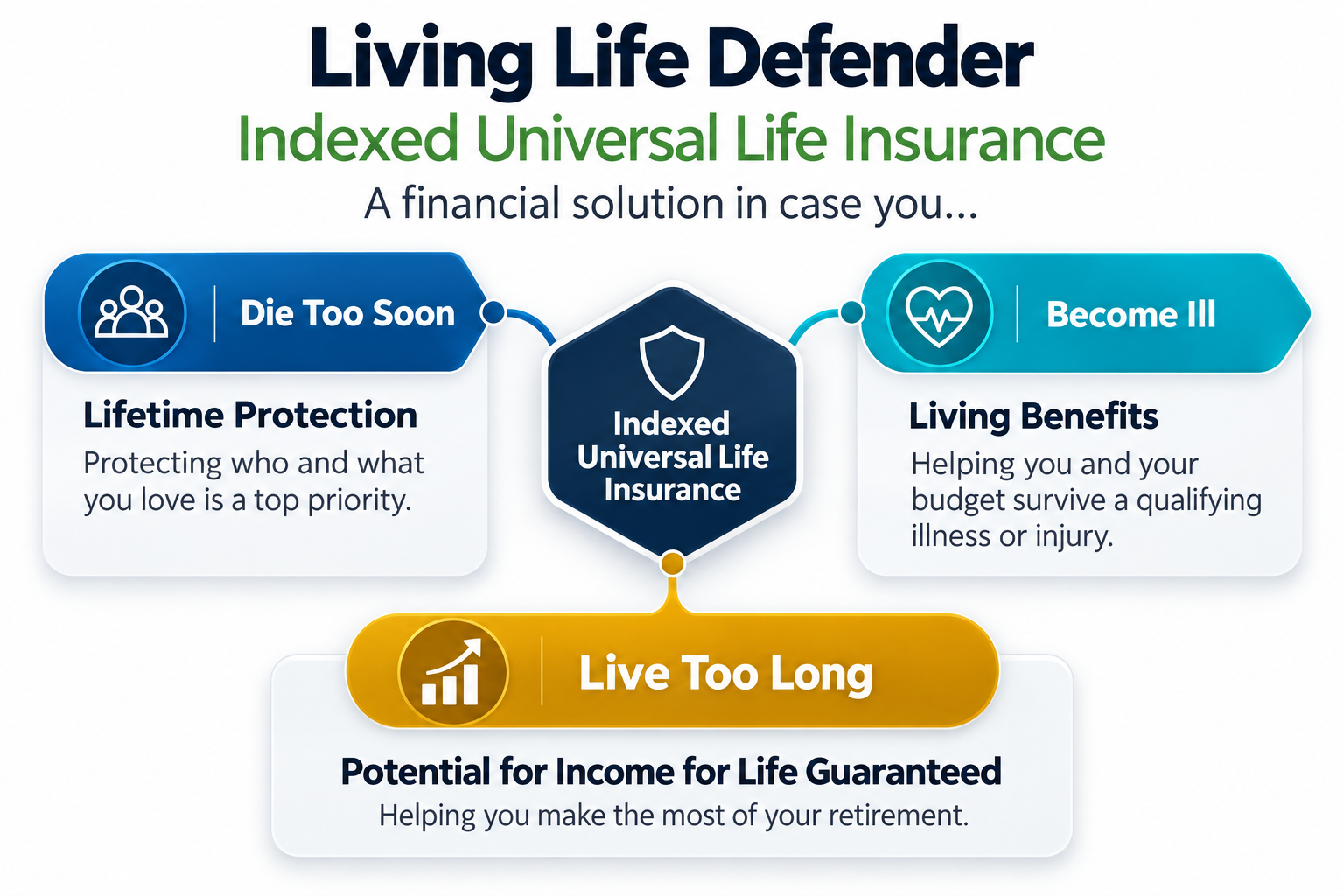
Some Indexed Universal Life (IUL) policies are designed around three of life's biggest what-ifs.
Lifetime protection: a death benefit to help your family keep their home, their plans and their future.
Living benefits: access part of your benefit early for a qualifying illness or injury.
Potential retirement income: cash value that can grow over time and be accessed later in life.*
*Accessing cash value through loans or withdrawals reduces the death benefit and cash value and may have tax consequences. IUL policies have fees, charges and caps; growth is not guaranteed.
It depends on the policy. Some policies include living benefit riders at no extra premium and apply a cost only if you use them. Others charge for the rider. Rose will show you exactly how it works for each policy you're considering.
Yes. The money you receive early comes out of your death benefit, and your cash value is reduced too. Carriers may also apply a discount or fee, so the payment can be less than the amount of death benefit it uses.
No. Living benefits come from riders that vary by carrier, product and state. Some are built in, some are optional, and some policies don't offer them at all.
No. A living benefits rider isn't long-term care insurance. A chronic illness rider can help with care costs, but its rules, benefit amounts and tax treatment are different. If long-term care is your main concern, Rose can compare both options with you.
First, you need a policy that includes the rider. That means applying and being approved through the carrier's underwriting. To use the benefit later, a physician must certify a qualifying condition as defined in your policy.
Rose will walk you through which policies include living benefits, what they'd cost and how they'd work for your family. No obligation.
Living benefits are provided through accelerated benefit riders and are subject to policy terms, eligibility, underwriting and state availability. Using an accelerated benefit reduces the death benefit and cash value. This is not a long-term care policy. Benefit amounts vary by carrier and product. Consult a tax advisor regarding your situation. CA License #[CA LICENSE #].